

Waterproof Permeable Vent Membrane for Car Lights: Selection Guide & Buying Tips
 2026.08.24
 Industrie nieuws
After a night drive through rain, a headlight housing with beaded moisture along the lens is usually a ventilation problem, not a sealing problem. A waterproof permeable vent membrane for car lights equalizes pressure continuously while keeping liquid water, dust, and road debris out. Changzhou Baonong New Material Technology Co., Ltd., under its COOLRUDYVIA brand, supplies these ePTFE-based membranes and assembled vent components to automotive lighting suppliers.
Why Car Light Housings Need a Waterproof Permeable Vent Membrane
Modern car light housings need a waterproof permeable vent membrane because they are sealed enough to trap air, but not sealed enough to survive repeated pressure swings. During a 20-minute drive, the internal temperature of a headlamp can climb from 25C to 80C. That temperature swing increases the volume of trapped air by roughly 18 percent. When the lamp is switched off, cooling creates a vacuum that pulls humid air through wiring grommets, leveling motor boots, and adhesive seams.
A vent membrane releases that pressure before it can draw moisture inward. It also keeps water from penetrating when the housing is hit by puddles, spray, or a pressure wash. The result is a housing that breathes without becoming a water trap.
Automotive lamp engineers typically specify an automotive-grade waterproof permeable vent membrane that can be welded, press-fit, or housed inside a molded cap.
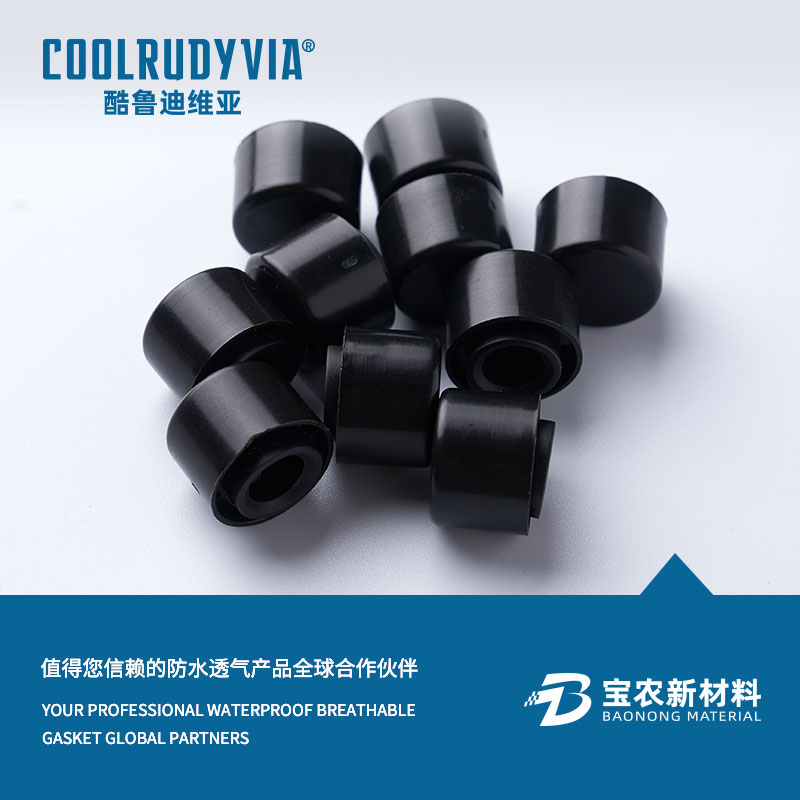 Custom Waterproof Permeable Vent Membrane For Car Lights We Offer Custom Waterproof Permeable Vent Membrane For Car Lights, Baonong Is China Car Lights Vent Membrane With Adhesive Backing Manufa... View Product →
 How the Waterproof Permeable Vent Membrane Works
A waterproof permeable vent membrane balances pressure through a microporous ePTFE structure, not through a valve, spring, or moving part.
The film is made by expanding polytetrafluoroethylene into a network of nodes and fibrils. The resulting pores are typically 0.1 to 0.5 micron in diameter. Individual air molecules pass through easily because their mean free path is much smaller than the pore openings. Water droplets, in contrast, are many times larger than the pore size. The combination of small pores and the material's low surface energy keeps water entry pressure above 100 kPa in most automotive-grade membranes.
When a lamp heats up, air flows out through the membrane. When it cools, filtered dry air flows back in. Because the membrane breaks the path for bulk moisture, it lowers condensation risk without blocking the pressure-balancing exchange.
| Performance factor | ePTFE vent membrane | Rubber grommet | Fully sealed housing |
| Pressure equalization | Continuous | Partial | None |
| Water ingress rating | IP68/IP69K possible | Limited | High until seal aging |
| Condensation risk | Low | Moderate | High under thermal cycling |
| Particle rejection | Filters dust | Open path for contaminants | Good until seal damage |
| Typical service life | 10 years in cycling tests | Depends on material | Depends on gasket integrity |
Car Light Failure Modes a Waterproof Permeable Vent Membrane Solves
A waterproof permeable vent membrane solves the failure modes that drive most headlight warranty claims: condensation fog, water tracks, dust intrusion, and vacuum damage.
- Condensation fog after washdown or cool-down. This happens when humid air enters a cooling lamp and reaches dew point on the reflector.
- Water tracks after bulb seal aging. A vent membrane reduces the vacuum that pulls water past degraded rubber seals.
- Dust and grime accumulation. Open or semi-open breathers draw in fine particles during every thermal cycle.
- Lens stress from repeated pressure swings. Unvented housings can flex adhesive bonds and develop micro-cracks at stress points.
Field return data from aftermarket lamp audits often attribute 60 to 70 percent of optical defects to moisture-related causes. A vent membrane alone cannot repair a housing design with a weak bulb seal, but it removes the largest driving force: pressure-driven airflow. The thermal-cycle behavior behind this is covered in our practical analysis of waterproof breathable plugs for condensation prevention in enclosed equipment.
Waterproof Permeable Vent Membrane for Car Lights: Key Selection Criteria
Select a waterproof permeable vent membrane for car lights by matching air flow, water entry pressure, temperature range, chemical resistance, and mounting style to the actual housing environment.
Air Flow and Pressure Balance Requirements
The membrane must move enough air to keep the internal pressure differential small during the fastest thermal spike. For a 10-liter housing, a target exchange rate of 300 to 600 ml/min at 7 kPa is a reasonable starting point, then confirm with pressure-decay testing.
Water Ingress and Chemical Resistance
The selected membrane should survive exposure to washer fluid residues, road salt, fuel vapor, and diluted acids. Do not judge a vent by water entry pressure alone: verify that the material retains hydrophobicity after 500 hours of temperature and humidity cycling.
Temperature and Thermal Cycling
Specify a membrane that can tolerate -40C to 150C, because headlamp housings are exposed to sub-zero nights and hot climate soak-back temperatures. Thermal cycling also shifts the requirements for the adhesive or weld joint, not just the membrane.
Mounting and Integration Options
Membrane pads, molded caps, and press-fit plugs each suit different housing wall layouts. When the housing wall is thick enough, an automotive vent cap assembly provides a strong retention feature and simplifies production-line orientation.
Custom Vent Cap For Automotive Lamps Manufacturers, Factory Changzhou Baonong New Material Technology Co., Ltd. Is China Vent Cap For Automotive Lamps Manufacturers, Factory, We Offer Custom Waterp... View Product → - Define the maximum pressure differential during cool-down.
- Set the target IP rating: IP68 for submersion, IP69K for high-pressure washing.
- Verify chemical exposure against the membrane and housing adhesive.
- Select the mounting style, then validate with samples on the actual lamp.
Validation Data: What Realistic Testing Shows
Validation tests show that the vented housing returns to ambient pressure in minutes, while the sealed housing holds a differential that continues to pull air through weak points.
A useful validation matrix includes four conditions: dry heat soak, cold soak, humid driving cycle, and direct water spray. Each condition is run with and without the vent installed. The vented housing should show near-zero pressure differential after cool-down and no water ingress after the full washdown sequence.
Design, Integration, and Quality Control at Scale
A vent membrane becomes a reliable automotive component only when the manufacturing process controls pore structure, adhesive quality, and installation force.
Changzhou Baonong New Material Technology Co., Ltd. operates a 6,000-square-meter workshop with 90-plus automated production machines, and every COOLRUDYVIA vent component goes through automated inspection plus manual checking before delivery.
For lamp makers that want a ready-to-install part, a preassembled waterproof breathable membrane cap combines the ePTFE membrane with a rigid carrier and a defined mounting geometry.
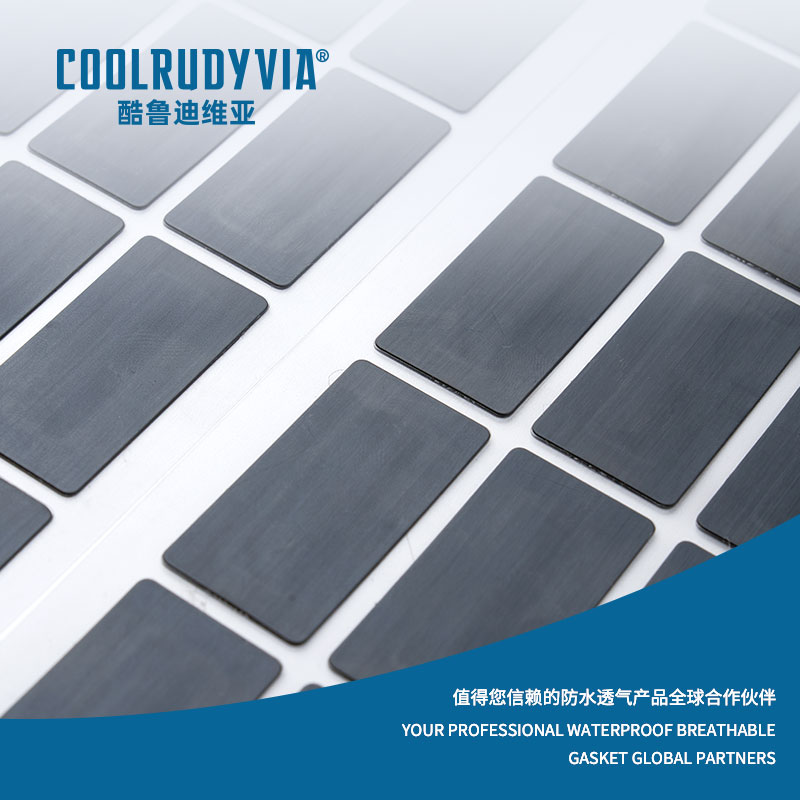 Wholesale ePTFE Vent Membrane/Cap For Automotive Lamps Suppliers Changzhou Baonong Offer Wholesale IP67/IP68 ePTFE Vent Membrane/Cap For Automotive Lamps, We Are China ePTFE Vent Membrane/Cap Suppliers,... View Product →
 Frequently Asked Questions
The sections below answer the four most common specification questions for car light vent membranes.
What size vent membrane do I need for a headlight housing?
Size the membrane from housing volume and the maximum pressure differential during cooling. A typical car headlamp interior volume is 5 to 15 liters, so a membrane with 200 to 500 ml/min at 7 kPa is usually enough for fog prevention. Confirm the value with pressure-decay testing on a sealed sample.
Can an ePTFE membrane stop all condensation?
A membrane can stop future condensation only if the housing is dry when assembled. If moisture is trapped inside during manufacturing, the lamp needs desiccant or a dry purge before sealing.
What IP rating should a car light vent membrane have?
The vent assembly, not the membrane alone, determines the IP rating. Look for IP68 for submersion and IP69K for high-temperature pressure washing. The housing, grommets, and vent seal must be validated together.
How long does a waterproof permeable vent membrane last?
ePTFE is inert and does not age like rubber or adhesive tapes. In thermal cycling tests, a properly installed membrane can maintain airflow and water entry pressure for more than 10 years. The usual failure point is the housing seal or adhesive, not the membrane itself.

-
Telefoonnummer
+86 138 6105 7907
-
Adres
Nr. 58 Fengjiatou, Xiaoliu Village, Luoyang Town, Wujin District, Changzhou, Jiangsu, China
Auteursrecht © Changzhou Baonong New Material Technology Co., Ltd.All rights reserved
Op maat gemaakte waterdichte ademende membranen/pakkingen/pluggen/doppen